
What Makes Glamping Accessible?
What Makes Glamping Accessible?
Glamping usually gets described as camping with better bedding. That is a comfort upgrade, and comfort is not access.
You can put a beautiful dome on a hillside, add linens and string lights, and still build something a wheelchair user cannot get into. Plenty of places have. So here is the actual answer to the question, as specifically as we can give it while we are still in pre-launch.
It starts in the parking spot
Access begins where the car stops. That means a firm, level place to park, room to open a door fully or deploy a ramp, and a surface that does not turn to mud. It means the unloading area is next to the unit, not a hundred yards from it.
Everything after this depends on getting this part right.
The path has to be boring
The best path is unremarkable. Firm, stable, wide enough, not steep, no lip at the door, and lit at night. Decorative gravel and railroad tie steps are where a lot of otherwise thoughtful sites lose people.
Inside, it is about clear floor space
A dome or tent is accessible when someone can turn around in it, get to both sides of the bed, reach the light switch and the outlets, and sleep on a bed at a height that makes a transfer possible. Furniture that can be moved beats furniture that is built in.
Power matters more than most hosts realize. A power chair, a ventilator, a charger, a pump. Outlets need to be where the equipment sits, not behind the bed frame.
The bathroom decides everything
Distance, layout, and turning space. A shared bathhouse can work if the route is short, firm and lit, and if the accessible stall is actually clear inside. A private accessible bathroom works better. Either way, guests need to know the details before they book, not after they arrive.
The rest of the site counts too
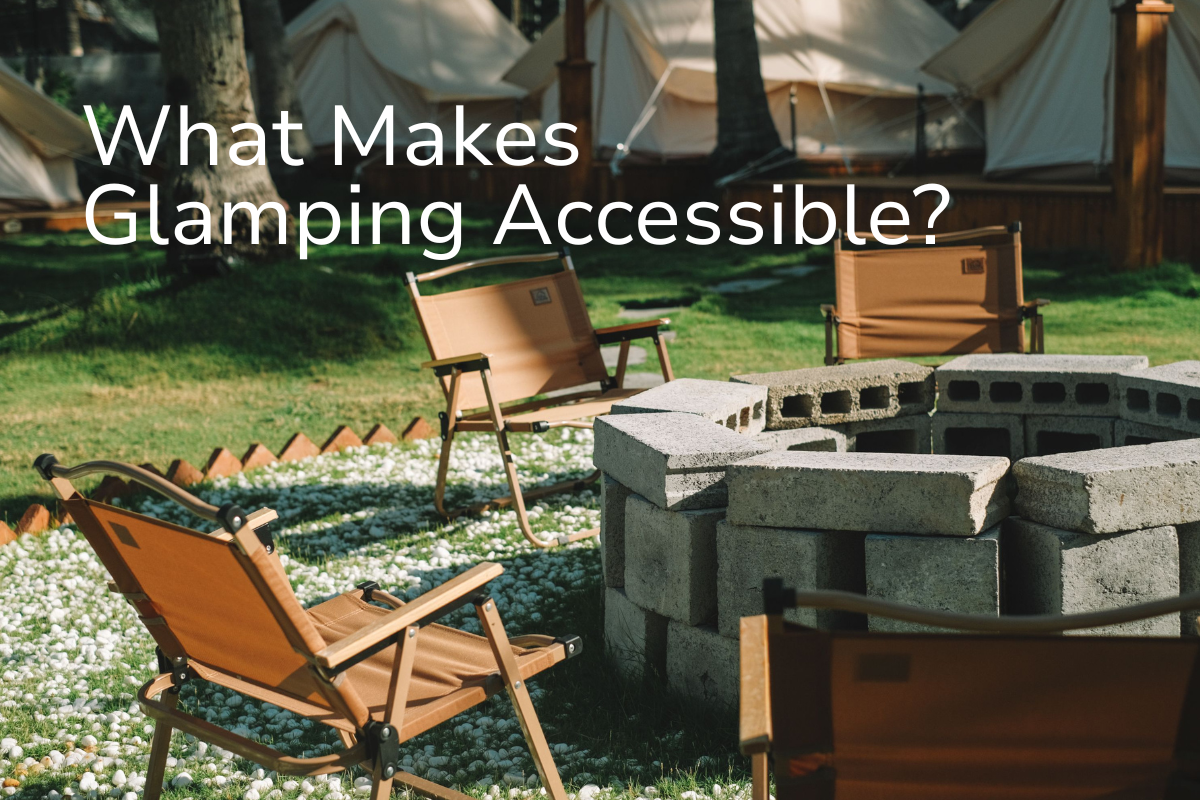
Fire rings at a height you can reach from a seated position. Picnic tables with an open end so nobody eats sideways at the corner. A gap in the seating circle so the group is one circle. Shade and shelter, because heat and rain both shorten a stay.
The last piece is information
An accessible stay that nobody can verify in advance is not accessible in practice. Measurements, photos taken at seated height, and a plain list of what does not work yet do more for trust than any amount of styling.
Where we are
Lucky Star Retreats is developing three ways to stay: accessible tent-ready sites, safari tents, and glamping domes, with target rates around 75, 130 and 280 dollars a night. Final details depend on the site and the buildout phase, and accessibility is the part we are designing first rather than last.
If you have stayed somewhere that called itself accessible glamping and it worked, or it did not, we would like to hear which.