
More Than a Day Outside: Accessible Outdoor Experiences Need Accessible Places to Stay
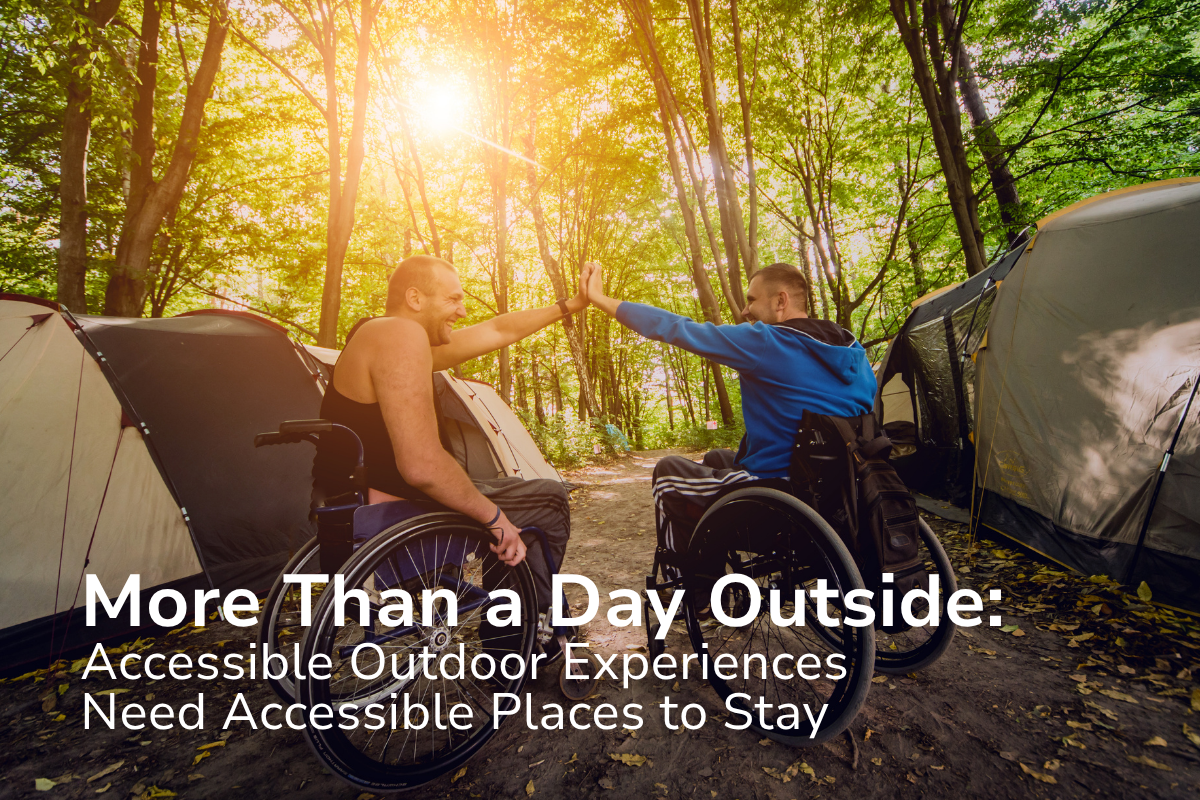
Nature should be available to more people.
Across Oregon and the Pacific Northwest, there are already people and organizations doing meaningful work to make that more true.
Oregon Spinal Cord Injury Connection is creating community, support, education, and connection for people living with spinal cord injuries and related disabilities.
Oregon Adaptive Sports is helping people experience outdoor recreation through adaptive programs, equipment, instruction, and community.
C.A.S.T. for Kids creates fishing experiences for children with disabilities and their families.
Adventures Without Limits supports outdoor access through community-based recreation and adaptive outdoor experiences.
Oregon Fish and Wildlife helps people and families connect with fishing, outdoor learning, and recreation.
Travel Oregon's accessible travel work is helping move the tourism conversation toward clearer, more useful information for travelers with disabilities and access needs.
This work matters.
It is part of a growing outdoor access ecosystem.
And it raises an important question:
Where do people stay?
Outdoor access is growing. Overnight access needs to grow with it.
A fishing event can be meaningful.
An adaptive ride can be powerful.
A lake day can give a family a memory they will carry for years.
A trail, paddle, community gathering, or outdoor program can help someone feel connected to nature, to other people, and to themselves again.
But for many people, the activity is only one part of the experience.
The full trip includes the drive, the bathroom, the gear, the transfer, the rest, the weather, the family logistics, the caregiver's needs, and the place to sleep.
A few hours outside can matter.
Sometimes, though, people need more than a day outside.
They need an accessible place to stay.
The place to stay can change who gets to participate
For people with disabilities, spinal cord injuries, mobility needs, adaptive equipment, chronic conditions, caregiving responsibilities, or family logistics, overnight access is not a small detail.
It can be the difference between going and not going.
Between staying for the whole event and leaving early.
Between participating with energy and arriving already exhausted.
Between a family feeling welcomed and a family feeling like they are improvising every step.
That is the gap Lucky Star Retreats is being developed to help address.
Accessible outdoor experiences need accessible places to stay nearby.
Not as an afterthought.
Not as a luxury.
As part of what makes outdoor participation more possible.
Learning from the communities already doing the work
Lucky Star Retreats is still in pre-launch, and that timing matters.
This is the moment to listen.
To learn from the SCI community.
To pay attention to adaptive recreation programs.
To understand what families need before and after outdoor events.
To notice what makes accessible travel feel trustworthy.
To ask what outdoor hospitality often misses.
The strongest version of Lucky Star Retreats will not be built in isolation.
It will be shaped by the people and organizations already expanding access to the outdoors.
Oregon Spinal Cord Injury Connection
Oregon Spinal Cord Injury Connection represents a community whose insight is essential to this conversation.
Accessible hospitality cannot be designed well from a distance.
People living with spinal cord injuries, paralysis, mobility changes, adaptive equipment, caregiving realities, and access barriers understand details that cannot be guessed.
What makes a place feel possible?
What makes it tiring?
What gets called accessible but still does not work?
What helps someone rest, gather, sleep, move, and participate with more ease?
Those are the kinds of questions Lucky Star Retreats wants to ask before the project is too far along to change.
Oregon Adaptive Sports
Oregon Adaptive Sports helps people participate in outdoor recreation through adaptive programs and community.
That work expands what is possible outside.
It also points to what is needed around the activity itself.
When adaptive recreation grows, nearby stay options matter too.
Where can people rest before or after a program?
Where can families stay?
What makes a weekend possible instead of just a day?
What kind of lodging helps people arrive with enough energy to fully participate?
C.A.S.T. for Kids
C.A.S.T. for Kids creates fishing experiences for children with disabilities and their families.
A day like that can become a core memory.
It can offer joy, confidence, connection, and a new relationship with the outdoors.
But family-centered outdoor experiences also require support around the day itself.
Rest matters.
Bathroom access matters.
Proximity matters.
The ability to stay nearby can change how possible the experience feels for the whole family.
Adventures Without Limits
Adventures Without Limits helps people connect with outdoor experiences through community-based programming and adaptive recreation support.
Programs like this show what becomes possible when access is planned with care, creativity, and support.
They also remind us that access is not only physical.
It is logistical.
It is emotional.
It is social.
It is whether someone feels welcome enough to try, and whether the experience has been designed so they do not have to solve every barrier alone.
Oregon Fish and Wildlife
Fishing can be one of the most welcoming entry points into outdoor recreation when the surrounding infrastructure works.
It can be slow, social, adaptive, family-centered, and deeply connected to place.
Oregon Fish and Wildlife and local fishing programs help people learn, participate, and spend time outside in ways that can include multiple ages, abilities, and experience levels.
That connects directly to the larger question Lucky Star Retreats is asking:
What outdoor experiences become more possible when people have a thoughtful place to stay nearby?
Travel Oregon and accessible travel
Travel Oregon's accessible travel work is part of a larger shift toward more transparent and useful travel information.
That matters because accessible travel depends on details people can trust.
Not vague promises.
Not a single accessibility icon.
Real information.
Pathway surfaces.
Bathroom layouts.
Parking.
Distance.
Room configuration.
Terrain.
Rest points.
Lodging.
Outdoor access.
People need to know whether an experience will work before they invest the time, energy, and money to get there.
Lucky Star Retreats is paying attention to that larger accessible travel conversation because outdoor hospitality has a role to play.
Access is the whole stay
A ramp matters.
A parking space matters.
A paved path matters.
But access is more than one feature.
It is the whole stay.
Can someone arrive without unnecessary stress?
Can they unload safely?
Can they move from the car to the lodging?
Can they get to the bathroom?
Can they reach the gathering space?
Can they rest privately?
Can adaptive equipment be stored, charged, or protected from weather?
Can a caregiver sleep comfortably too?
Can a family stay together?
Can someone participate without feeling like an exception?
Can the experience feel welcoming, not improvised?
These are the kinds of questions accessible overnight hospitality has to ask from the beginning.
More than a day outside
Lucky Star Retreats is being developed as an accessibility-first outdoor retreat and glamping concept in the Pacific Northwest.
The project is still in pre-launch, and many pieces are still being shaped: land, funding, infrastructure, partnerships, programming, and future guest experience.
That is why this stage matters.
The right conversations now can shape what the project becomes later.
Lucky Star Retreats is building relationships with people connected to spinal cord injury community, adaptive recreation, accessible travel, outdoor hospitality, land, tourism, funding, and community support.
The goal is not simply to create a beautiful place.
The goal is to create a place that helps more people stay close to nature with comfort, dignity, privacy, and ease.
More room for rest.
More room for families and caregivers.
More room for equipment, routines, gathering, and recovery.
More thoughtful overnight options near the outdoor experiences people want to be part of.
More than a day outside.
Help shape what comes next
Lucky Star Retreats is early, and that is intentional.
There are several ways to support the project right now:
Join the interest list.
Share the website with someone who would care.
Tell us about an organization, event, or community we should know.
Introduce us to someone connected to accessibility, adaptive recreation, outdoor hospitality, land, tourism, funding, or community development.
Share what accessible outdoor hospitality needs to understand before it builds.
Lucky Star Retreats is being built around a simple belief:
Nature should be available to more people.
And for many people, access to nature means more than getting there.
It means being able to stay.