
Why Accessible Travel Information Needs to Be Specific
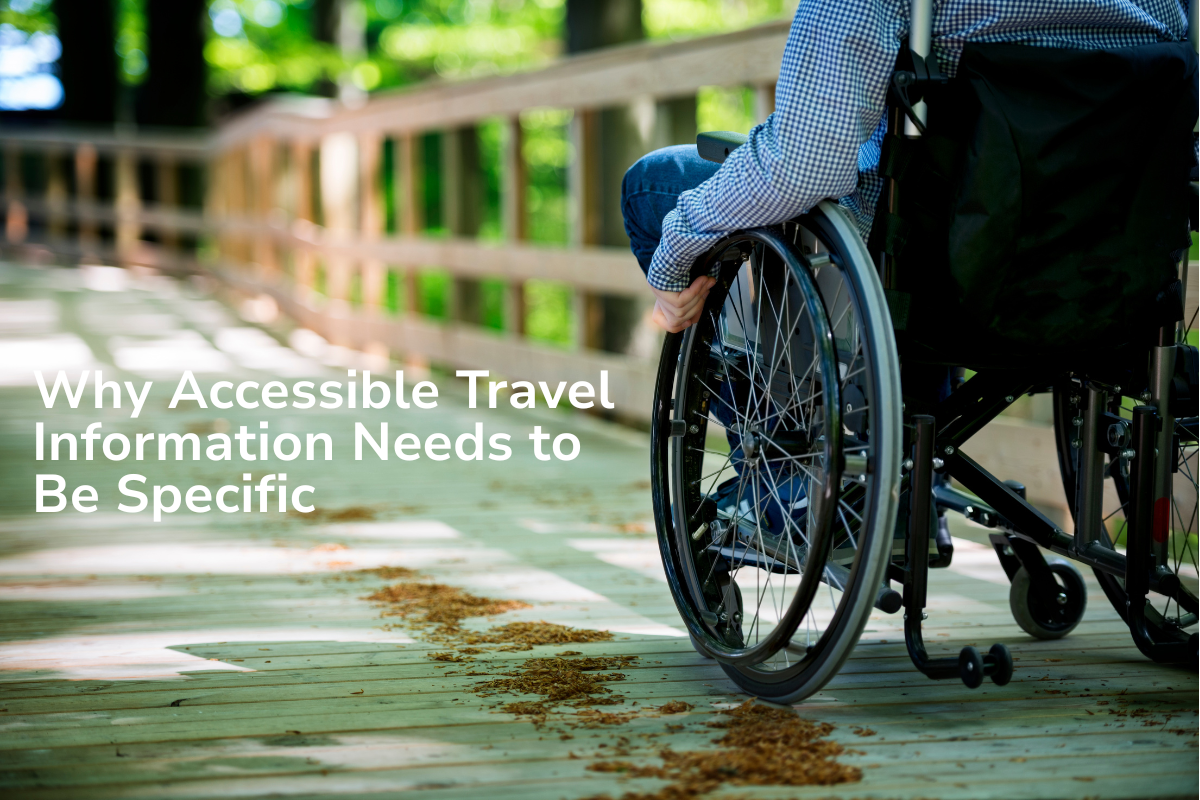
Why Accessible Travel Information Needs to Be Specific
A wheelchair icon on a listing tells you almost nothing.
It does not tell you the width of the door. It does not tell you whether the bathroom has room to turn around, whether the path from the parking spot is gravel or packed surface, how far the bathhouse is, or whether the bed is high enough to transfer onto. It does not tell you what happens when it rains.
So people do the research themselves. They call ahead. They email for photos. They read reviews looking for one useful sentence. They screenshot a floor plan. And after all of that, plenty of them still arrive to find the accessible site sits at the top of a short hill.
That is the problem Travel Oregon's accessible travel work chipping away at, and it is the standard we want to hold ourselves to before we ever open a booking page.
Vague information is not neutral, it costs people money
An unclear listing shifts the risk onto the traveler. If the details turn out to be wrong, the guest has already paid for gas, time off, a night that cannot be refunded, and the energy it took to get there. Sometimes the trip just ends.
Specific information does the opposite. It lets someone decide in five minutes whether a place will work, and it lets them decide no without wasting a weekend finding out.
What specific actually looks like
We think an accessible listing should answer these before anyone has to ask:
- the surface and slope of the path from parking to the door, in feet, not adjectives
- door widths and the turning space inside
- bed height, and whether there is clear floor space on both sides
- the exact distance to the nearest bathroom and what is inside it
- where adaptive equipment can be stored, kept dry, and charged
- whether a caregiver has their own bed and somewhere to rest
- photos taken from a seated height, not from a standing photographer
- what is not accessible yet, said plainly
That last one matters most. A place that tells you what it cannot do yet is a place you can trust about the rest.
We are writing our version now
Lucky Star Retreats is still in pre-launch, which means our accessibility page is a set of commitments rather than a finished list of measurements. As sites and buildout get real, our plan is to publish the numbers, update them when things change, and say when something is not ready.
You can see the ways to stay we are planning, from accessible tent sites to glamping domes.
Tell us what you always have to ask
If there is a question you ask every single place before you book, send it to us. We would rather answer it on the page than make you call.