
How Retreats Can Include Guests with Access Needs From the Beginning
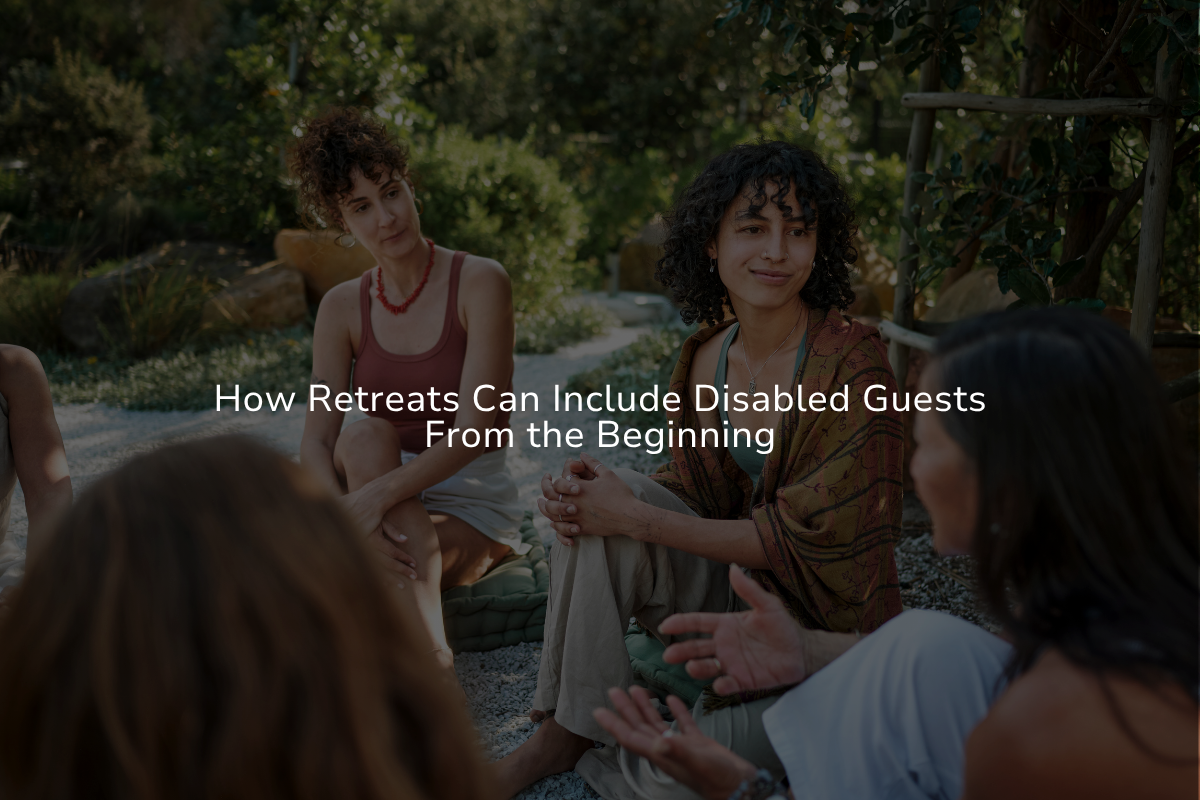
How Retreats Can Include Guests with Access Needs From the Beginning
Most retreats do not exclude guests with access needs on purpose. It happens in the order of operations.
The venue gets booked because it is beautiful. The schedule gets built. Registration opens. Then someone asks whether the meditation room is upstairs, and the answer is yes, and the host is left apologizing to a person who already paid.
Access has to be a first decision, not a repair. Here is what that looks like in practice for anyone planning a retreat.
Ask the venue questions with numbers in them
Not is it accessible. Instead: how wide is the doorway to the gathering space, what is the surface between the lodging and the meeting room, how far is the nearest accessible bathroom, what is the bed height, where can equipment charge overnight, is there a step at any entrance we will use.
If a venue cannot answer, that is your answer.
Put access in the budget on day one
An interpreter, a ramp rental, a shuttle, a printed large text schedule, an extra room for a caregiver. Added at the start these are a line item. Added six weeks out they are a crisis, and the usual outcome is that the guest is quietly told it will not work this time.
Build the schedule with air in it
Back-to-back sessions with ten minute gaps assume everyone moves at the same speed. Some guests need thirty minutes between things for a transfer, medication, rest, or the walk itself. Longer breaks help guests with access needs and improve the retreat for everyone else too.
Ask on the registration form, then actually use the answers
One open question works: what do you need from us to take part fully. Then assign someone to read the responses and reply personally before arrival. Nothing erodes trust faster than a form that collects needs nobody acts on.
Say what you cannot do yet
A retreat that publishes a plain list of what is and is not accessible lets people decide for themselves. That is more respectful than a vague promise that falls apart on site.
Why outdoor retreats need more of this, not less
Terrain, weather, distance, lighting and bathroom placement all get harder outside. That is also where the experience is worth the most, which is why we think it deserves the planning.
Lucky Star Retreats is in pre-launch and being designed as an accessibility-first retreat and outdoor stay. Over time we expect to host partner-led retreats and group stays, and the site is being planned so that a retreat leader can say yes to a guest with access needs without redesigning the weekend.
If you lead retreats, we want your list
What do you always have to work around at other venues. Tell us now, while the plan is still on paper.
Read about how we are building with community or get in touch.